


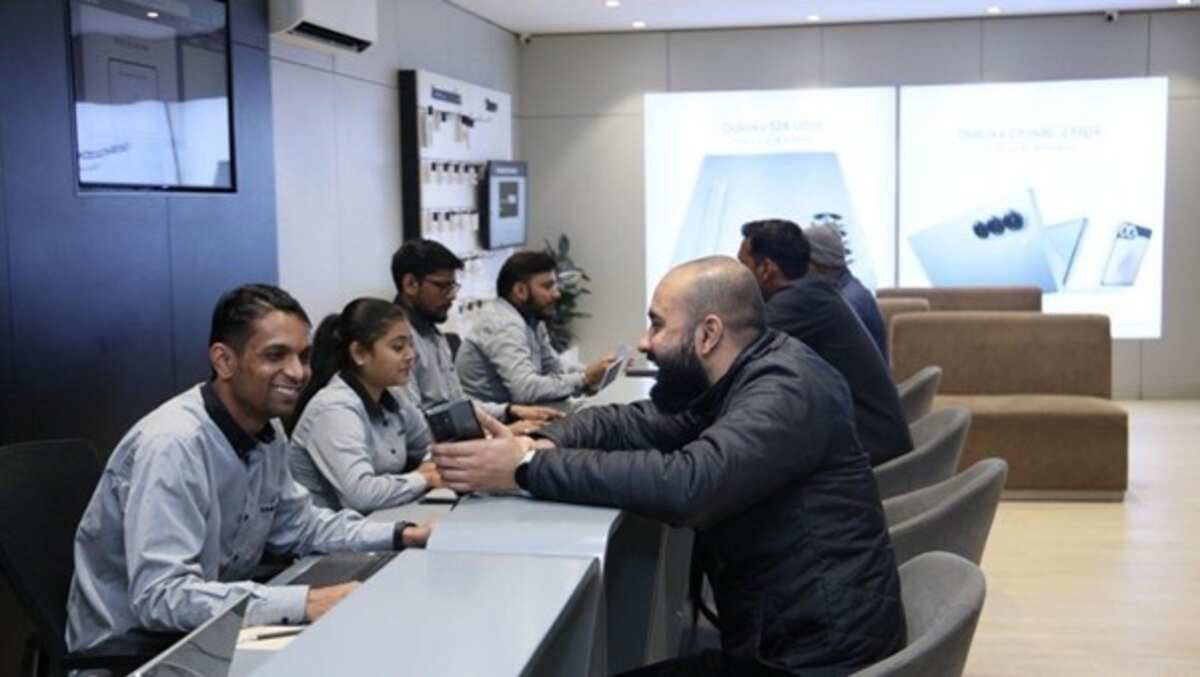
- Samsung today operates one of India’s largest customer service networks with 3,000+ service touchpoints, 12,500+ engineers
- Samsung’s customer service journey mirrors India’s digital transformation — from manual service logs and pagers in the 1990s to AI-powered diagnostics and connected care today
- Customers today can access support through SmartThings-enabled Proactive Care, WhatsApp, remote diagnostics, online booking and voice assistance in 10 Indian languages
GURUGRAM, India – May 25, 2026 – Samsung, India’s largest consumer electronics brand, marks 30 years of its customer service journey in India, tracing its evolution from a small service operation in Delhi in the mid-1990s to one of the country’s largest and most digitally-connected customer care ecosystems.
When Service Was Still Analog
The story of Samsung’s customer service evolution closely mirrors India’s own technological transformation
— from an era of handwritten complaint registers, pagers and physical service visits to AI-powered diagnostics, connected appliances and predictive care ecosystems.
When Samsung opened its first service centre in India in March 1996, the country looked very different. Phones and internet were rare and customer requests were manually recorded in registers resting on crowded office desks.
“Back then, customer care was deeply personal in the most literal sense. Customers often walked directly into service centres because telephones were not common in homes. Service requests were manually entered into registers, and engineers travelled across cities carrying logbooks, paper slips and toolkits,” said Rajiv Gupta, Director, Service Operations, Samsung India.
By December 1996, Samsung had already expanded to 21 service centres across India. In 1997, engineers began using pagers to receive customer alerts — a small but important technological leap at the time.
Building the Infrastructure of Trust
As India’s consumer technology market rapidly expanded, Samsung continued scaling its customer support ecosystem. The late 1990s saw the growth of franchise service centres across the country, while 2003 marked another major milestone with the launch of Samsung’s first in-house call centre at Nehru Place in Delhi and the introduction of a toll-free customer support number.
Over the next two decades, Samsung steadily transformed customer service from a reactive support function into an integrated, technology-driven customer experience ecosystem.
Today, Samsung operates one of India’s largest customer service infrastructures with over 3,000 service touchpoints, 12,500+ trained engineers and 16 strategically located parts warehouses across the country.
“What truly defines Samsung’s customer service journey is how closely it has evolved alongside the lives of Indian consumers,” said Sunil Cutinha, Head, Customer Satisfaction, Samsung India.
“For us, customer service is not just a support function — it is a core part of the Samsung experience. Over the years, we have built a service ecosystem that combines scale, innovation and empathy. Whether through our extensive service network, contactless offerings like pick-up and drop, or next-generation service centres, our focus remains on delivering fast, transparent and reliable service that customers can trust every day,” he added.
Predictive Care
Samsung’s service ecosystem today extends far beyond physical service centres into AI-enabled proactive and connected care experiences.
Through SmartThings-enabled Proactive Care powered by Home Appliances Remote Management (HRM), Samsung appliances can proactively detect performance issues and notify customers even before disruptions occur. Refrigerators can alert users if cooling efficiency drops unexpectedly, while air conditioners can proactively communicate maintenance requirements.
Customers today can access 24×7 support through toll-free helplines, WhatsApp assistance, remote diagnostics and online appointment booking platforms. Samsung’s voice support services are available in 10 Indian languages, helping make customer support more accessible across regions.
The company has also strengthened digital-first support offerings such as Pick and Drop service for smartphones and the Digital Service Center platform, which provides self-help videos, troubleshooting support and transparent pricing information.
AI-driven customer support technologies — including intelligent co-pilots, speech-to-text systems and sentiment analysis tools — are additionally helping service teams respond faster and more empathetically to customer concerns.
Relationships that Last Forever
“Samsung has been a part of my life for three decades now. Our first television was a Samsung, and later the first smartphone I bought for my son was a Galaxy device. What has remained constant over the years is the trust and reliability associated with the brand,” said Sanjeev Gupta, a long-time Samsung customer from Ludhiana, Punjab.
Over the years, Samsung has also nurtured an ecosystem of service professionals through four training academies and its long-term skilling initiative, Dost Service. Through its partnerships with 22 ITIs, Samsung Dost Service has trained over 14,500 service engineers across India.
Extending Care into Sustainability
Samsung is also integrating sustainability into its customer care ecosystem through initiatives such as Care for Clean India, which promotes responsible e-waste disposal and recycling through authorized recyclers.
From Service Centres to Connected Care
As Samsung marks 30 years in India, its customer service journey reflects more than the evolution of technology. It reflects the evolution of care itself — from handwritten registers and pagers to AI-powered connected homes and predictive support, while continuing to place customer trust at the centre of innovation.


